> For the complete documentation index, see [llms.txt](https://docs.snomed.org/llms.txt). Markdown versions of documentation pages are available by appending `.md` to page URLs; this page is available as [Markdown](https://docs.snomed.org/snomed-ct-practical-guides/snomed-ct-search-and-data-entry-guide/2-introduction-to-search/2.2-using-snomed-ct-features-to-support-optimized-searches.md).
# Using SNOMED CT Features to Support Optimized Searches
The logical model of SNOMED CT is able to the support development of search techniques which can support effective and efficient Concept and Description retrieval.
It is however important to be aware that different techniques apply to different types of searches in order to avoid unconstrained searches which can make browsing SNOMED CT like navigating a jungle. This section presents some features of SNOMED CT which can help support effective and efficient searches.
## Benefits of Using SNOMED CT Hierarchies
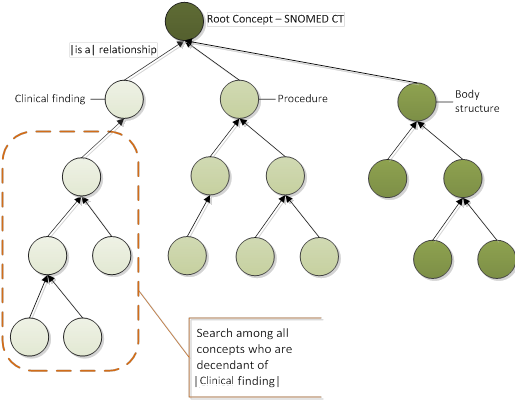
The | is a | hierarchies in SNOMED CT support searches to be constrained by type, e.g. searches for Concepts which are contained in one of the top-level hierarchies such as | clinical finding | , | body structure | and | procedure | (see [Constrain Searches by Supertype Ancestors](/snomed-ct-practical-guides/snomed-ct-search-and-data-entry-guide/4-optimizing-searches/4.4-constrained-searches.md#constrain-searches-by-supertype-ancestors)).
Search by subtype hierarchy
This type of search limits the number of search candidates significantly, as it excludes all Concepts of types other than those specified by the chosen subtype hierarchy. More granular Concepts than the top-level Concepts can be used as the basis for this type of search. For instance, searching for subtypes of | Cardiovascular finding | will further concentrate the type and number of candidate results.
## Benefits of Using Reference Sets
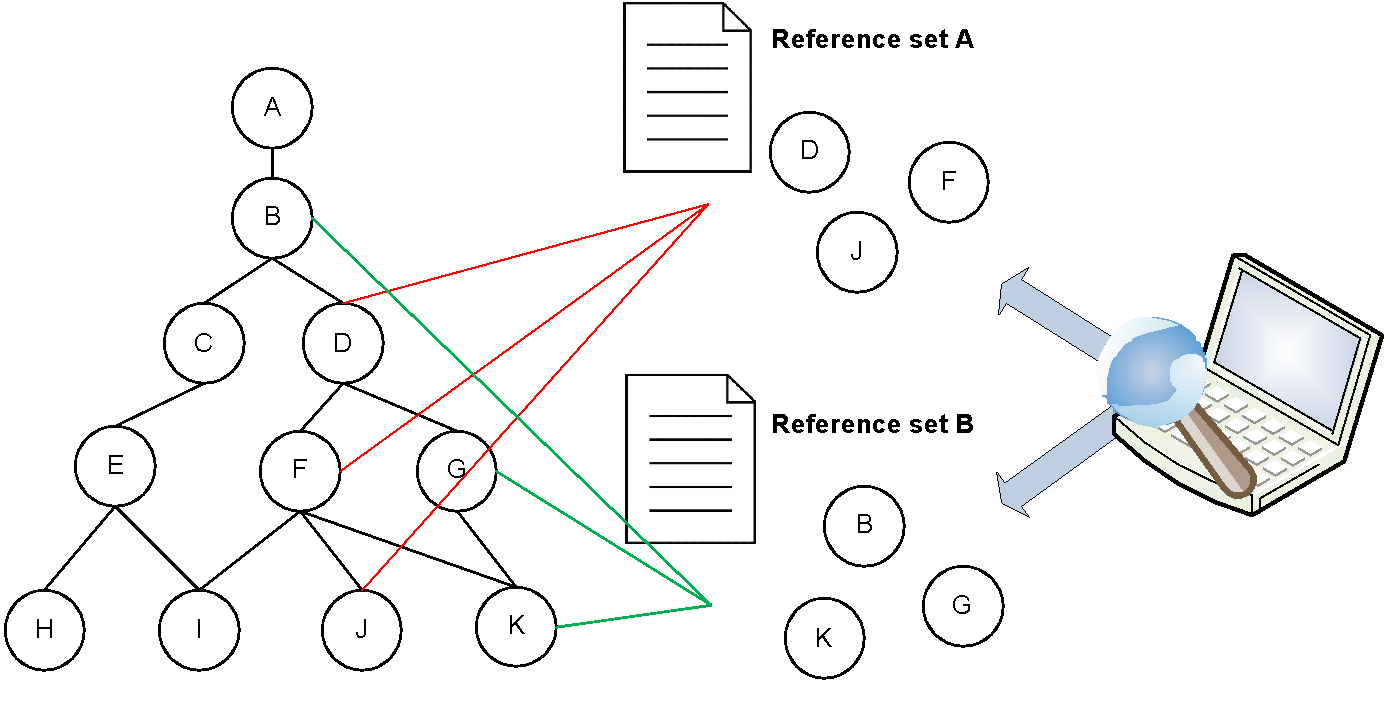
SNOMED CT supports the definition of Reference Sets. Reference Sets are important as they can be used to constrain search and data entry or support SNOMED CT navigation. Hence, searching within a Reference Set will limit the number of search results and ensure that the result set will be relevant for the desired context (see [Constrain Searches by Reference Sets](/snomed-ct-practical-guides/snomed-ct-search-and-data-entry-guide/4-optimizing-searches/4.4-constrained-searches.md#constrain-searches-by-reference-sets)).
Search using Reference Sets
Moreover, Reference Sets can also be used to exclude Concepts as possible result candidates. For example, as SNOMED CT contains both animal and human Concepts, for human medicine it is likely that Concepts in the non-human Reference Set needs to be excluded from all searches.
## Language Reference Sets
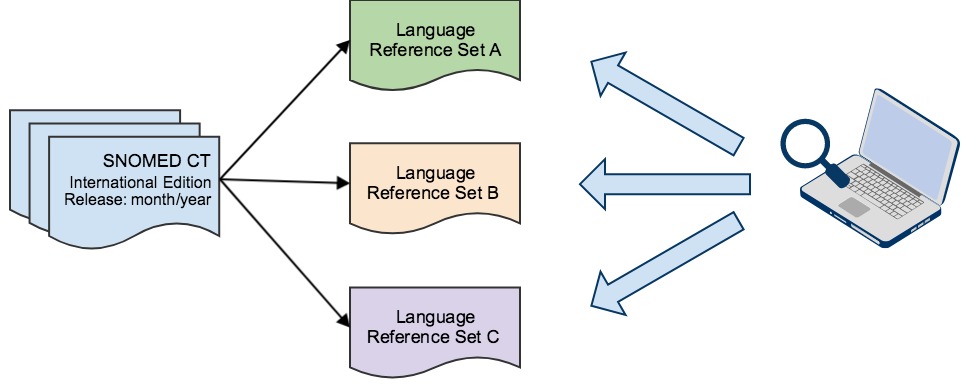
It is a benefit that SNOMED CT supports development of Language Reference Sets, as this supports searches by Descriptions that are limited to a specific language or dialect (see [Constrain Searches by Language or Dialect](/snomed-ct-practical-guides/snomed-ct-search-and-data-entry-guide/4-optimizing-searches/4.4-constrained-searches.md#constrain-searches-by-language-or-dialect)). A Language Reference Set identifies the Descriptions which are considered to be preferred designation for and acceptable as alternatives for SNOMED CT Concepts in the context of a given language and, optionally, dialect.
Search in different languages using language reference sets
Provide Feedback
---
# Agent Instructions
This documentation is published with GitBook. GitBook is the documentation platform designed so that both humans and AI agents can read, navigate, and reason over technical content effectively. Learn more at gitbook.com.
## Querying This Documentation
If you need additional information that is not directly available in this page, you can query the documentation dynamically by asking a question.
Perform an HTTP GET request on the current page URL with the `ask` query parameter, and the optional `goal` query parameter:
```
GET https://docs.snomed.org/snomed-ct-practical-guides/snomed-ct-search-and-data-entry-guide/2-introduction-to-search/2.2-using-snomed-ct-features-to-support-optimized-searches.md?ask=&goal=
```
`ask` is the immediate question: it should be specific, self-contained, and written in natural language.
`goal` is optional and describes the broader end goal you are ultimately trying to accomplish on behalf of the user. GitBook uses it to tailor the answer towards what is most useful for that goal.
The response will contain a direct answer to the question and relevant excerpts and sources from the documentation.
Use this mechanism when the answer is not explicitly present in the current page, you need clarification or additional context, or you want to retrieve related documentation sections.