> For the complete documentation index, see [llms.txt](https://docs.snomed.org/llms.txt). Markdown versions of documentation pages are available by appending `.md` to page URLs; this page is available as [Markdown](https://docs.snomed.org/snomed-international-documents/snomed-ct-glossary/s/statistical-classification.md).
# statistical classification
## statistical classification
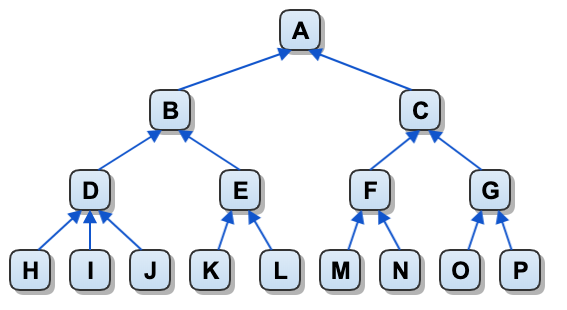
A hierarchical organization of terms or ideas that allows aggregation into categories.
#### Notes
* A *statistical classification*
* Allows categories to be counted and compared, without double counting.
* Is a monohierarchical classification, which mean that each node in the hierarchy is included in only one node in the level above. Although this avoids double counting, it means that arbitrary decisions are made when a node is naturally related to more than one parent.
#### Example
* In a *statistical classification* such as ICD-10, *bacterial pneumonia* is related to *lung disorder* or *infectious disorder* , but not to both.
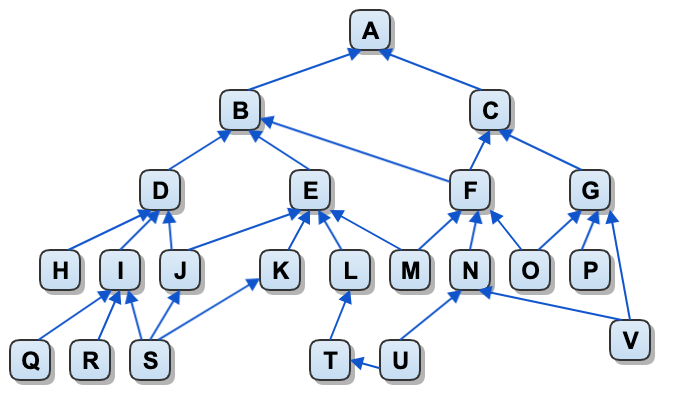
* In contrast, a polyhierarchical classification such as SNOMED CT, enables *bacterial pneumonia* to be a subtype of both *lung disorder* and *infectious disorder*. This enables more inclusive analytics and avoids overlooking conditions that are in a different category from the one being analyzed.
##
Provide Feedback
---
# Agent Instructions
This documentation is published with GitBook. GitBook is the documentation platform designed so that both humans and AI agents can read, navigate, and reason over technical content effectively. Learn more at gitbook.com.
## Querying This Documentation
If you need additional information that is not directly available in this page, you can query the documentation dynamically by asking a question.
Perform an HTTP GET request on the current page URL with the `ask` query parameter, and the optional `goal` query parameter:
```
GET https://docs.snomed.org/snomed-international-documents/snomed-ct-glossary/s/statistical-classification.md?ask=&goal=
```
`ask` is the immediate question: it should be specific, self-contained, and written in natural language.
`goal` is optional and describes the broader end goal you are ultimately trying to accomplish on behalf of the user. GitBook uses it to tailor the answer towards what is most useful for that goal.
The response will contain a direct answer to the question and relevant excerpts and sources from the documentation.
Use this mechanism when the answer is not explicitly present in the current page, you need clarification or additional context, or you want to retrieve related documentation sections.